
When Your Relationship Is the Reason You’re Overeating
We’ve all been there. The door slams, or worse, the silence becomes deafening. Maybe it’s a recurring argument that never gets resolved, or a feeling that you’re carrying the emotional weight of two people.
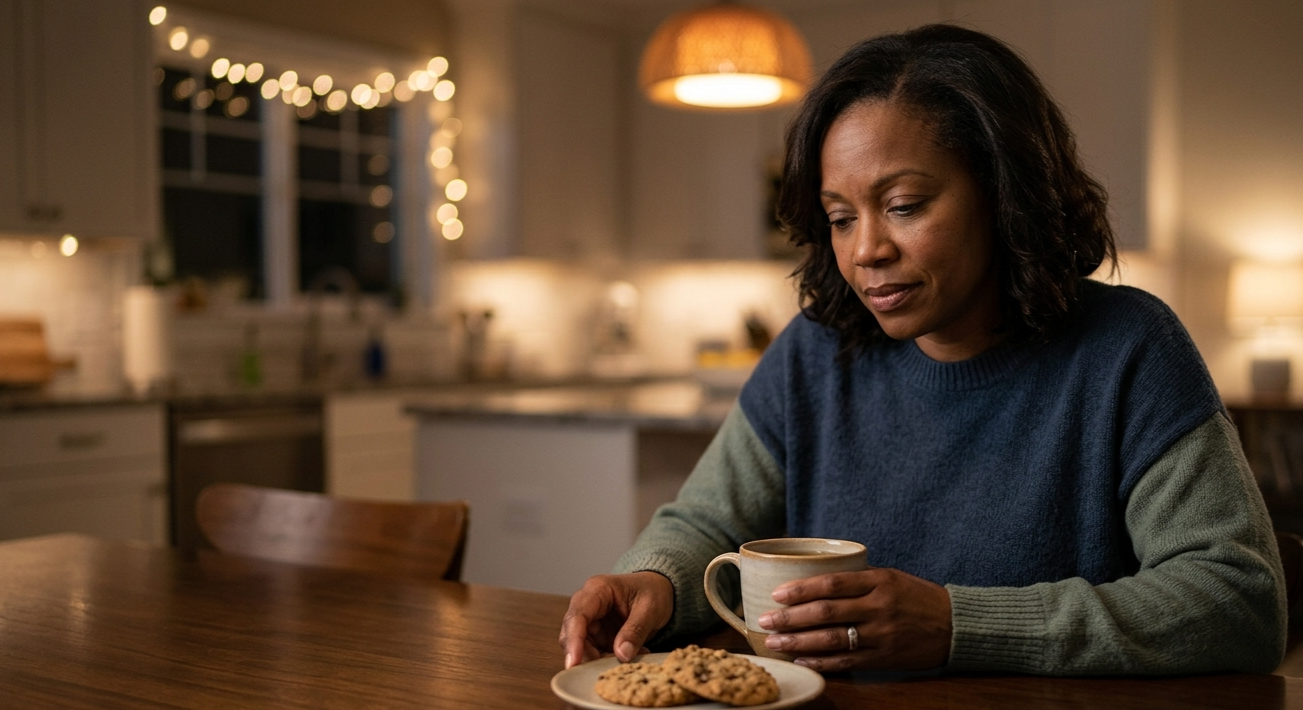
Before you even realize it, you’re standing in the kitchen. You aren’t looking for a salad; you’re looking for a hug in the form of a bag of chips, a sleeve of cookies, or a bowl of pasta.
If this sounds familiar, I want you to take a deep breath and hear this: You are not "weak-willed," and you are not failing. You are simply trying to survive a situation that feels emotionally starving.
The "Hug" We Find in Food
When our relationships aren't providing the safety, intimacy, or comfort we need, our brains look for the next best thing. High-sugar and high-carb foods trigger a temporary release of dopamine and serotonin—the "feel-good" chemicals.
In that moment of the first bite, it feels like everything is going to be fine. The world softens. The tension in your chest loosens. For a few minutes, the food provides the warmth that the person sitting across from you in the living room isn't.
The Hard Truth: Is It Really "Fine"?
We use food to numb the sharpness of a lonely relationship. But as the empty wrapper sits on the counter, the reality remains: Food can fill your stomach, but it can never fill your heart.
When we reach for comfort food to cope with relationship stress, we are often trying to:
Quiet the Inner Critic: Numbing the feeling that we aren't "enough."
Avoid Conflict: Choosing a snack instead of starting a conversation that might lead to an argument.
Reclaim Control: When you feel like you can't control your partner’s actions, you can control what you eat (even if it feels out of control later).
It’s Not Just About the Calories
In your 40s and beyond, this cycle is even harder on your body. Chronic relationship stress keeps your cortisol spiked, which tells your body to hang onto every ounce of fat—especially around your midsection. When you add emotional overeating on top of that, your hormones are fighting an uphill battle.
How to Start Healing
If your relationship is fueling your overeating, the solution isn't a stricter diet. It’s a deeper level of self-compassion.
Pause and Name It: The next time you reach for comfort food, ask yourself: "Am I hungry, or am I lonely/angry/hurt?" Just naming the emotion can take away some of its power.
Seek Genuine Comfort: If you’re hurting, what do you actually need? A conversation? A walk alone to clear your head? A boundary?
Forgive the Slip-Ups: If you did overeat, don't beat yourself up. Shame only fuels more stress, which leads back to the pantry.
You Deserve to Be Full
You deserve a life where you are nourished by your connections, not just your meals. It is okay to admit that your relationship is hard. It is okay to admit that you’ve been using food to cope.
Acknowledging it is the first step toward reclaiming your health—and your happiness.